
Community Stargazers Answers
Here you’ll find answers to real astronomy and astrophotography questions submitted by our community. As more questions come in, this page will grow into a searchable resource and FAQ.
(You can find definitions for all key astronomy terms in our Glossary section)
Peter from Hamburg Germany asks:
With hour long exposures while the earth is turn at 1,000 miles per hour, why [are images] not blurry?
Answer:
Hi Peter, great question! The earth turns at around 1,000 miles per hour, and everything in the universe is moving as well! There are a few ways to compensate for the rotation so you can take a time-exposed snapshot. One way is to use what is called an equatorial mount and motors that slowly move your telescope consistent with the earth’s rotation. Also, computers today can slowly move the camera to keep alignment. These allow for incredibly long exposures, allowing us to capture and process many more photons than we can with just a quick image or that we can gather with the naked eye.
Linda in New York asks:
Are the colors in your nebula pictures real or enhanced?
Answer:
Great question, Linda — the answer is actually both.
The colors in nebula photos are real, but our eyes can’t see them well through a telescope. At night, our vision relies mostly on rod cells, which are great at detecting faint light but terrible at detecting color. Because nebulae are huge, dim clouds of gas, they usually appear as soft gray shapes.
A camera doesn’t have that problem. And in astrophotography you can take long exposure pictures over several minutes or hours. When a camera collects all of that light it reveals the colors that are already there. Those colors come from the gases inside the nebula. It’s actually the colors that tell us what the nebula are made of.
Hydrogen glows red or violet
Helium can appear yellow, orange, or blue
Nitrogen often shines bright red or green
Other elements add their own colors and hues
Astrophotography doesn’t “fake” these colors — it simply brings out what your eyes can’t detect in low light. It’s the same technique used by the James Webb and Hubble telescopes.
Now cameras are great, but through a telescope you get something photos can’t provide: 3‑D depth and the sense of floating in space. Not to mention the thrill of seeing a nebula live with your own eyes. The camera reveals the hidden colors; the telescope reveals the experience.
Thanks for asking, Linda!
Keys": Deep sky objects, nebula, astrophotography
Robbie in Central Pennsylvania asks:
Do you have to spend a lot or get a big telescope to really see things?
Answer:
Not at all, Mark. A small telescope — even one under $200 — can show the Moon’s craters, Jupiter’s moons, Saturn’s rings, star clusters, and bright nebulae. Bigger telescopes show more detail, but you don’t need one to enjoy the night sky. The most important thing is simply getting outside and looking up. See our telescope guide for more information
Julie in New Jersey asks:
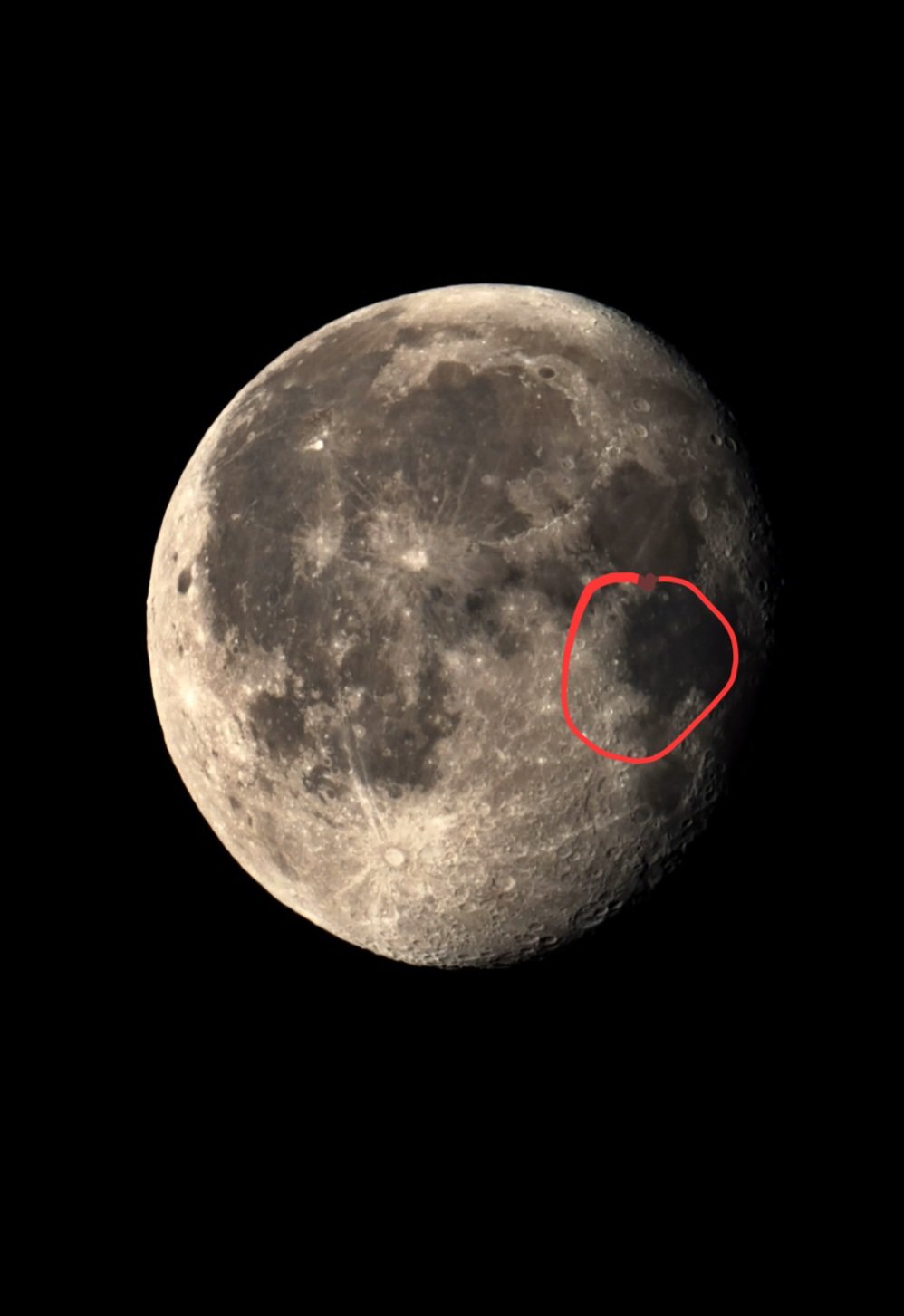
Can you see where the astronauts landed on the Moon?
Answer:
Great question, Julie. We can’t see the landing sites with backyard telescopes — they’re just too small and too far away. Even the biggest telescopes on Earth can’t zoom in that close. But NASA’s Lunar Reconnaissance Orbiter can see them, and it has taken amazing photos of the landers and even the astronauts’ footprints. I we can give you a general idea of where the Sea of Tranquility is. That’s where NASA Astronauts first landed.
Dave in Media asks:
What’s the farthest thing you’ve ever seen through a telescope?
Answer:
Great question Dave! The farthest objects you can see from your backyard are galaxies. Some of them are millions of light‑years away, and a few are more than 2 billion light‑years distant. They look like tiny smudges of light — but each one contains billions of stars. For me personally, the farthest thing I’ve seen through a telescope is Bodes and the Cigar Galaxies, about 12 million light years away. In a photo I’ve taken, Galaxy IC 4617 near the Great Globular Cluster in Hercules is over 500 million light years away!
More answers coming soon!